NAPLES IS HAVING A MOMENT.
Southwest Florida Has Been Calling People Here for Generations.
Beaches and boats. Tarpon and redfish. Islands and mangroves. Golf, extraordinary homes, business, philanthropy, and a coast that has been drawing families here for generations.
Every so often, the rest of the world catches up with a place you have lived and loved all your life.
Naples seems to be having one of those moments.
This summer, Condé Nast Traveler named Naples one of the twenty most beautiful towns in the world, highlighting its soft Gulf beaches, golf, Old Florida character and proximity to Marco Island and the Everglades.
I smiled when I saw it.
My connection to Southwest Florida began much earlier.
My family first came here on vacation when I was two years old. Sanibel and Captiva were part of that first introduction. By the time I was five, we had moved here from Grand Island, New York where my six siblings and I were born.
I suspect that story will sound familiar to quite a few people. You come down for spring break or a week at the beach. You shell on Sanibel, take a boat around Captiva and watch the sun disappear into the Gulf. Then, almost without realizing it, you begin wondering what it might be like to stay.
And sooner or later, someone asks: What would it be like to live here?
For our family, vacation became home.
When I think about how Southwest Florida became the place it is today, I keep coming back to the water.
The water has always been part of the story.
The Coast I Grew Up With
Some of my strongest Southwest Florida memories happened on boats.
We spent time throughout Sanibel and Captiva, Fort Myers Beach, St. James City, and the islands of Pine Island Sound. We stayed many times on Useppa and spent time on Cayo Costa. Farther south, Naples and the Olde Naples beaches became part of the same coastal world, and we later spent summer weeks on Marco Island.
We ran offshore on the Bertram for grouper.
Then we would switch completely and take the flats boats into the Ten Thousand Islands, working the mangrove edges for redfish and snook.
Lunch at the Snook Inn was often part of the day.
It was hot as blazes in the summer, and we loved it.
Sailing became part of the routine too. Labor Day weekends meant CMCS races down the Southwest Florida coast — Fort Myers toward Naples Yacht Club, on to Marco Island Yacht Club and back.
Tarpon moved through the passes, grouper were offshore and redfish tucked beneath the mangroves. Plenty of days, catching anything seemed almost beside the point.
Those experiences still shape the way I see this area today.
I don't think of Naples as an isolated resort town.
I see one connected coastal world stretching from Sanibel and Captiva through Pine Island Sound and St. James City, Useppa and Cayo Costa, south through Naples and Marco, and eventually dissolving into the mangrove labyrinth of the Ten Thousand Islands.
That coastline has been attracting people for a very long time.
Useppa Tells a Much Earlier Version of the Story
Useppa Island captures a remarkable amount of Southwest Florida history in one very small place.
People were using the island and the waters around it thousands of years ago. The Calusa lived throughout this part of Southwest Florida, building their lives around an extraordinarily productive estuary. Later, Cuban fishermen used islands around Charlotte Harbor as fishing ranchos, long before luxury resorts or waterfront estates entered the picture.
By 1882, a Smithsonian visitor referred to the island as “Useppa Key” and noted that Spanish fishermen used it as a source of fresh water.
Only a few years later, Useppa was described as nearly deserted. In February 1895, visitor Eleanor Pearse recorded finding one Cuban family living there.
Then the island began another transformation.
Around the middle of the 1890s, A.M. McGregor acquired Useppa. John Roach, a Chicago streetcar magnate, became another early owner and developed a winter home and hotel as the island began attracting visitors who came south in search of tarpon.
That McGregor name stopped me when I first read it.
Ambrose McGregor and his wife, Tootie, were winter residents of Fort Myers. Riverside Avenue was later paved and renamed McGregor Boulevard in honor of Ambrose McGregor.
I grew up just off McGregor Boulevard, on Alhambra Drive along the Caloosahatchee River.
I had spent years thinking of Useppa and McGregor Boulevard as two completely separate pieces of my Southwest Florida map. I didn't realize how directly their histories touched.
There is another small Florida-history connection that caught my attention. During the 1700s, the name Seminole came into use for Native people in Florida, a word commonly traced to the Spanish cimarrón, associated with “wild” or “runaway.”
As a Florida State University alumna and lifelong Seminole fan, of course I noticed that one.
Useppa Island itself would later play a role during the Seminole Wars, when Fort Casey was established on the island in 1850.
By the early 1900s, the island's identity had shifted again.
Barron Gift Collier purchased Useppa in 1911, his first Florida real-estate acquisition. He made the island part of his Florida life, expanded its resort operations and helped establish it as a renowned sporting destination.
The Izaak Walton Club was founded there in 1912. Work began on a golf course in 1915, and by 1916 Useppa had a nine-hole course and 15 to 20 tarpon guides working on the island.
Some of Southwest Florida's earliest luxury tourism grew around fishing.
It is remarkable how familiar that combination still feels: natural beauty, sport, hospitality, conservation and people willing to travel a long way to experience this coast.
Connecting an Isolated Coast
Barron Collier's influence soon extended far beyond Useppa.
He eventually acquired more than 1.3 million acres in Southwest Florida and invested heavily in roads, communications and development.
Most famously, Collier helped finance and complete the difficult Southwest Florida stretch of the Tamiami Trail, creating a road connection across the Everglades between Florida's Gulf and Atlantic coasts.
Even the name tells the story: Tampa + Miami = Tamiami.
For a coast that had been difficult to reach, access changed everything.
Visitors could become residents.
Commerce followed. So did businesses, neighborhoods, hotels and institutions.
Southwest Florida's modern history is, in many ways, a story of connection — first by water, then by road, and eventually by air.
The Ten Thousand Islands: The Wild Edge
One of the things I value most about Southwest Florida is how abruptly civilization can fall away.
Drive south from Naples and the landscape begins to loosen.
Then the coastline breaks apart into the Ten Thousand Islands — mangrove islands, shallow bays, tidal creeks and backcountry stretching toward the Everglades.
I have fished those waters many times, and they remain one of my favorite parts of this coast.
Decades after Barron Collier's original land acquisitions, Collier family interests participated in a federal land exchange that transferred 108,000 acres in Collier County to the U.S. Department of the Interior.
About 35,000 acres became the Ten Thousand Islands National Wildlife Refuge; much of the balance was incorporated into Big Cypress National Preserve and the Florida Panther National Wildlife Refuge.
Today those protected waters provide habitat for manatees, wood storks, peregrine falcons, sea turtles and countless other species.
I love this part of our history.
Southwest Florida grew because people saw tremendous possibility here.
It remains extraordinary because portions of it were allowed to remain wild.
You can spend a morning fishing among mangroves with barely a building in sight and have dinner on Fifth Avenue South that evening.
That combination is difficult to replicate.
The wild Florida and the refined Florida still live remarkably close to one another.
The Gulf Still Sets the Tone
Naples has evolved dramatically, but the Gulf still sets the tone.
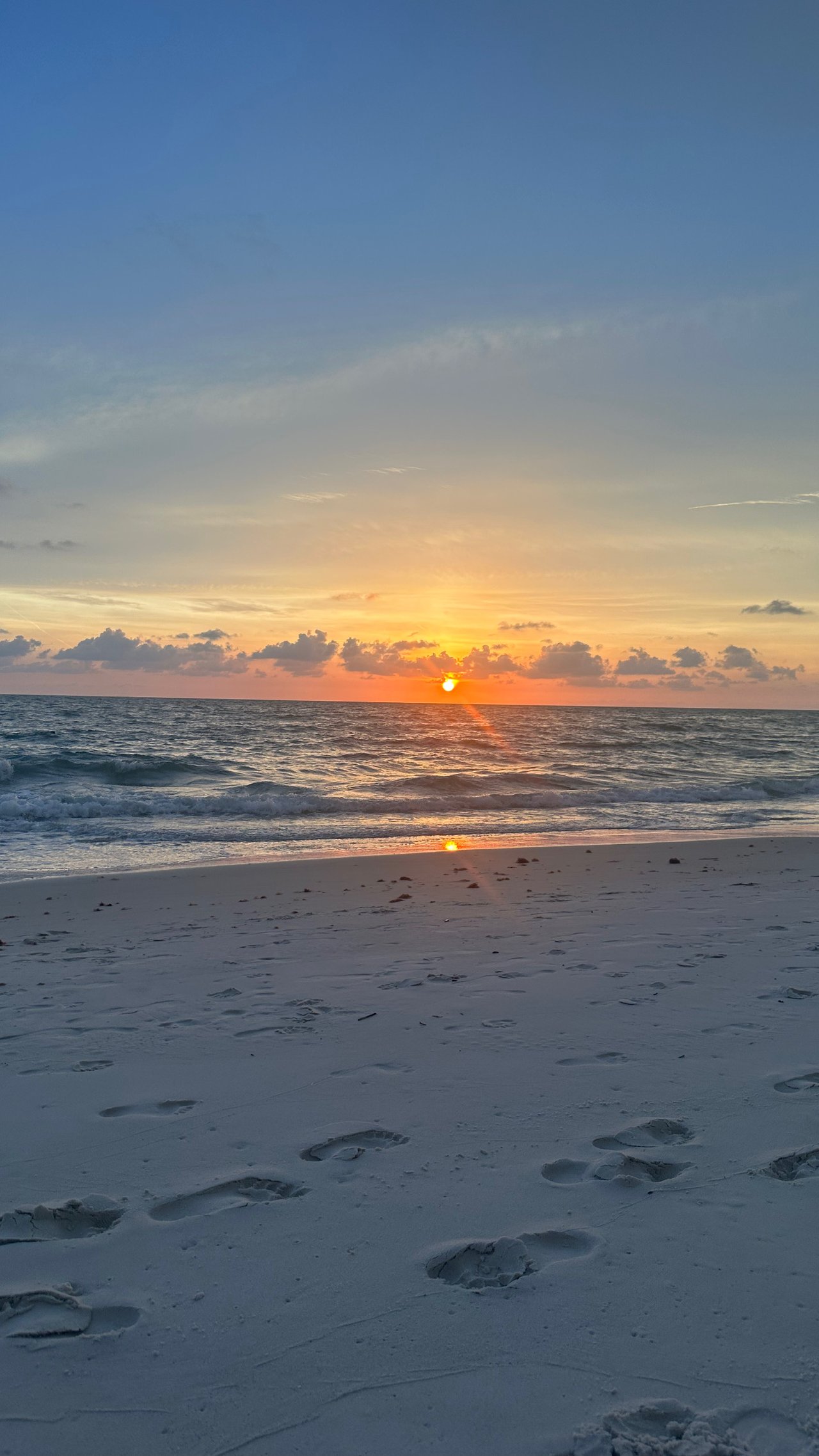
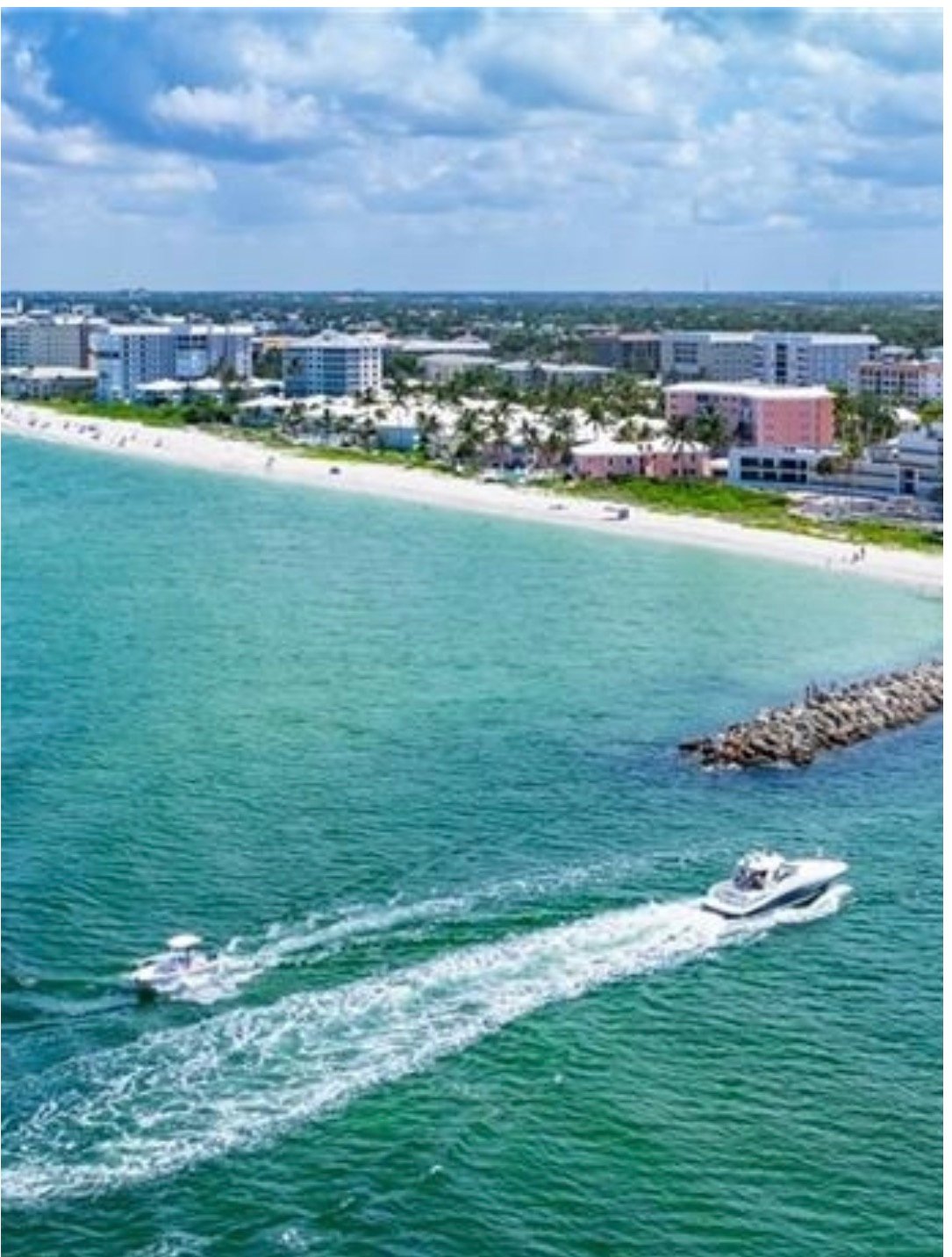
Park Shore Beach in the morning. A walk along a Naples beach at sunset. Olde Naples and the Pier area. The long sweep of Gulf Shore Boulevard. Boats leaving Naples Bay. A Gulf view from a beachfront condominium.
That relationship with the Gulf shapes recreation, architecture, real-estate value and the pace of daily life.
Condé Nast Traveler's recognition reflects what locals already know: Naples competes beautifully on a world stage. Its proximity to Marco Island, the Everglades and protected natural areas gives it a setting few luxury markets can match.
I hope the next chapter of growth continues to protect the things that created the appeal in the first place — mature trees, public access to the water, clean bays, mangroves, quiet streets and views that still feel open.
Boating Changes the Real-Estate Conversation
When someone tells me they want waterfront property, I want to know what waterfront means to them.
Those seven letters cover a lot of ground in Naples.
Do you want to look at water?
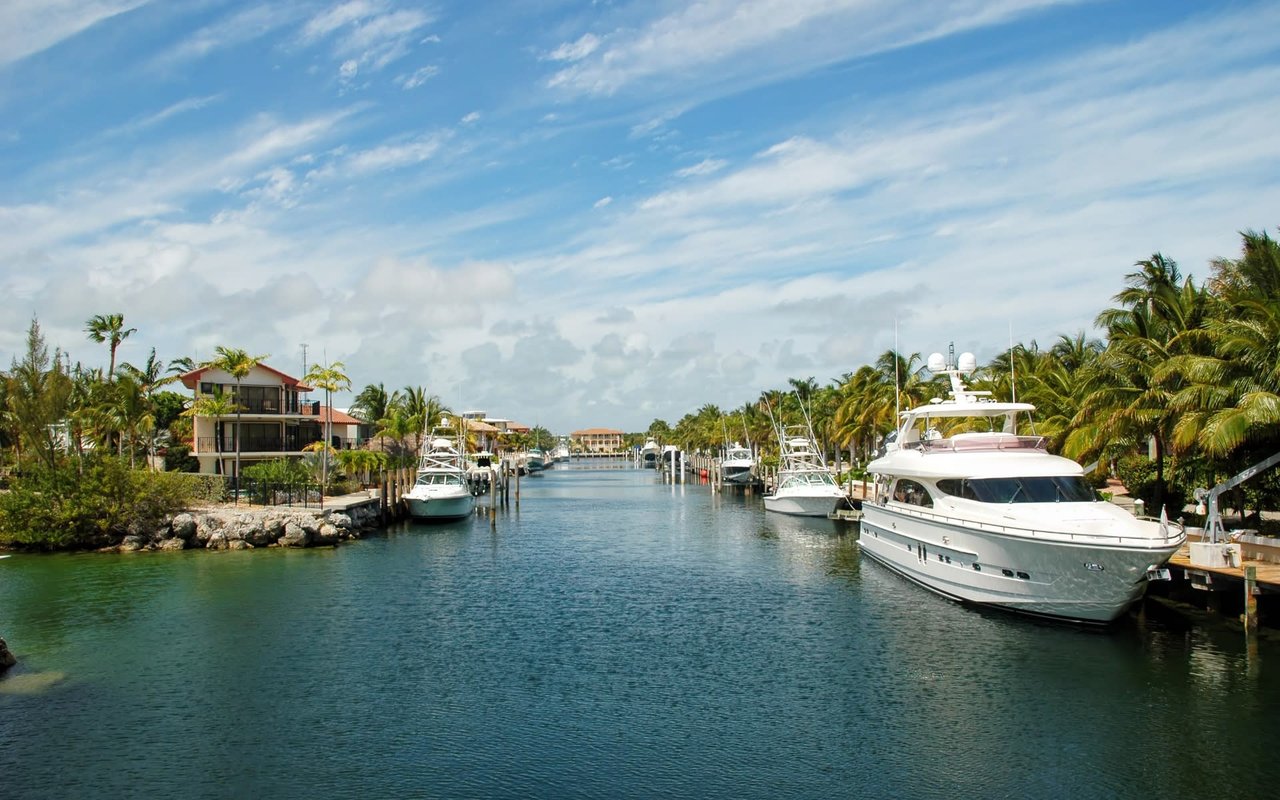
Do you want your boat behind the house?
What kind of boat?
Are you fishing the backcountry or heading offshore?
Does bridge clearance matter?
How quickly do you want to reach the Gulf?
Would you rather keep the boat at a marina and live directly on the beach?
For someone who boats, those questions can matter every bit as much as square footage.
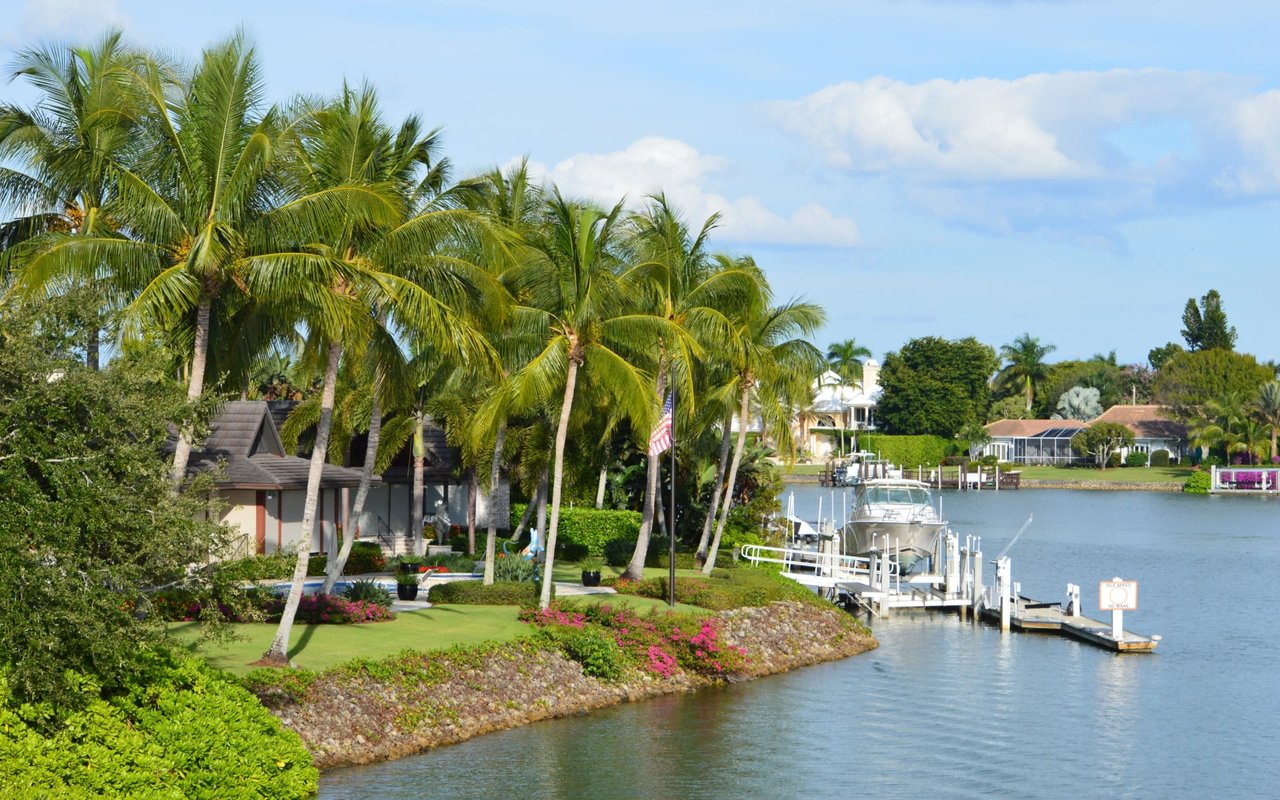
Aqualane Shores and Royal Harbor offer two very different versions of boating life, as do Naples Bay and other waterfront pockets throughout the city.
The prettiest house may not be the right house if the boating doesn't work.
That is where local knowledge becomes useful.
Fishing Is Still Part of the Culture
Southwest Florida gives anglers an unusual range of water within a relatively compact area.
The bays, mangroves, passes and backcountry hold snook, redfish, spotted seatrout and tarpon. Offshore Gulf waters open up grouper and a completely different day on the water.
Useppa became internationally known through tarpon fishing more than a century ago. Pine Island Sound and Boca Grande remain legendary among tarpon anglers today.
For me, those aren't tourism descriptions.
I remember the boats.
I remember the heat.
I remember watching the shoreline disappear as we headed offshore.
I remember flats boats working through the mangroves.
And I remember lunch at the Snook Inn.
Those experiences are one reason I pay attention to how a waterfront property actually connects to the water around it.
Real estate here makes much more sense when you begin with how someone actually intends to live.
Naples Really Is a Golf Town
Then there is golf.
Golf Digest currently counts 108 courses within 15 miles of Naples — 92 private and 16 public.
Calusa Pines, Naples National, Old Collier, Tiburón and the many private club communities have made golf part of the city's identity.
For many residents, the club becomes a home base for far more than golf: friends, dinner, tennis, pickleball, charitable events and business relationships.
That is why I would we will evaluate a golf-community purchase based on the community and the house.
The community around the house matters.
Port Royal and the Top of the Market
Naples has also been making national headlines for extraordinary residential sales, especially in Port Royal.
Those transactions fascinate me.
I immediately want to understand the number.
What created the premium?
The lot? The exposure? Water depth? Boating access? Elevation? Privacy? Architecture? Replacement cost? An irreplaceable view?
At this end of the market, price per square foot tells only part of the story.
Two properties can look very similar on a spreadsheet and feel completely different when you walk through them.
The numbers matter.
Context matters more.
That is one of the things I enjoy about advising clients here.
There Is Serious Business Behind the Beautiful Setting
Southwest Florida is sometimes described as though everyone here is permanently on vacation.
There is a substantial working economy behind the lifestyle.
Naples is home to major healthcare, education and financial organizations as well as businesses such as Arthrex, whose global headquarters here serves as a center for medical education, product innovation and scientific research.
The broader Southwest Florida corridor includes public companies, healthcare systems, construction and development firms, wealth-management businesses, hospitality companies and a large base of privately held enterprises.
That matters because today's Naples buyer may be 42 rather than 72.
They may still be building a company.
Managing investments.
Practicing medicine.
Working remotely.
Or commuting regularly to another city.
That world feels familiar to me. Before real estate, my own career spanned finance, entrepreneurship, pharmaceuticals and dermatology.
I enjoy talking with people who are still very much in the middle of building something.
Arts, Healthcare and Air Access
A primary residence has to work on an ordinary Tuesday, so the practical pieces matter too.
NCH operates two hospitals with a combined 713 beds, an alliance of more than 1,000 physicians and medical facilities, and locations across Southwest Florida.
Southwest Florida International Airport served more than 11.1 million passengers in 2025, giving residents broad access to major U.S. markets and select international destinations.
Naples has become culturally richer too.
Artis—Naples brings together the Naples Philharmonic and The Baker Museum, while Gulfshore Playhouse has added a significant theatre and education center near downtown.
Restaurants and galleries have expanded. Design has become part of the city's identity. Major hospitality brands continue making substantial investments here.
The beach may be the first attraction.
A complete community is what makes full-time life work.
A Culture of Giving
Philanthropy is woven deeply into Naples life.
The 2026 Naples Winter Wine Festival raised more than $30 million in its live auction for children in Collier County. Since the festival began in 2001, it has raised more than $366 million.
Those numbers are extraordinary for a community this size.
Generosity here has helped build healthcare programs, arts organizations, schools and children's charities.
It is an important part of the Naples story.
A More Multigenerational Naples
One of the changes I enjoy most is seeing a broader mix of generations choose Southwest Florida.
Professionals, entrepreneurs, executives and young families are arriving earlier in life.
Flexible work has helped, and so has the realization that a serious career and a coastal life can coexist.
A workday can still end with the Gulf, golf, tennis, boating, fishing or dinner with friends.
I have a personal interest in that trend too.
I would love for my own daughter to move back to Southwest Florida someday.
Our family first came here on vacation. Then we moved here.
I love the idea of another generation discovering its own reason to come back.
Maybe That Is How Southwest Florida Gets You
The more I think about my own story, the more familiar the pattern feels.
You visit.
You return.
One day you begin imagining your ordinary Tuesday happening here.
There are probably people sitting on Sanibel, Captiva, Marco or a Naples beach this year with no intention of moving to Southwest Florida.
Yet.
That is how places become hometowns.
How Did Naples Become Naples?
There is no single answer.
The Gulf gave Southwest Florida extraordinary geography. Indigenous people built lives around these waters thousands of years ago. Fishing drew early sportsmen.
Barron Collier and others built transportation and communications links that connected an isolated coast to the rest of Florida.
Business and families followed.
Golf and hospitality grew.
Philanthropists built institutions.
Later generations protected important pieces of the wilderness.
The Naples receiving international attention today grew out of all of it.
Mangroves and marinas.
Tarpon and yachts.
Historic cottages and new waterfront estates.
Golf courses and wildlife refuges.
Fifth Avenue and the Ten Thousand Islands.
The wild Florida and the refined Florida remain close enough to experience in the same day.
I think that is a large part of what makes this place so compelling.
There Are Many Ways to Live Here
That is how I prefer to begin a real-estate conversation: with the life someone wants.
Do you want to walk to the beach?
See the Gulf from your living room?
Keep a boat behind the house?
Walk to dinner?
Belong to a club?
Travel frequently and lock the door behind you?
Have children and grandchildren close?
Once I understand that, the geography becomes much easier to navigate.
Park Shore, The Moorings and Coquina Sands offer one version of coastal Naples.
Olde Naples offers another.
Aqualane Shores and Royal Harbor appeal to many serious boaters.
Beachfront condominium living has its own rhythm.
Port Royal occupies a category of its own.
Farther east, golf communities, larger homesites and newer construction open another set of choices.
The right property should support the life you came here to have.
Why I'm Writing Jan's Journal
My road into real estate has been somewhat unconventional.
My background spans business, e-commerce, marketing, entrepreneurship, pharmaceuticals and dermatology. Over more than three decades, I've built businesses, evaluated opportunities, negotiated and made decisions where numbers and people both mattered.
Today, as a Real Estate Advisor, I get to bring that experience to the place I have known all my life.
Jan's Journal — Naples & Beyond is where I'll share what I'm seeing, learning and remembering about Southwest Florida: real estate, our coastline, boating, architecture, neighborhoods, local history, business, philanthropy, design and interesting people.
Some stories may begin with market data.
Others may begin with a favorite shop or restaurant, a house tour, a neighborhood walk, a piece of local history or a day on the water.
And some may start with a memory that suddenly connects two parts of Southwest Florida I had never realized were connected at all.
After all these years, Southwest Florida still gives me plenty to explore.
Apparently, the rest of the world is becoming curious too.
Welcome to Jan's Journal — Naples & Beyond.
Janice Harris, P.A.
Real Estate Advisor | Compass
Naples • Southwest Florida
Considering Naples or Southwest Florida? Let's talk.
Sources & Further Reading
Condé Nast Traveler — “The 20 Most Beautiful Towns in the World for Every Type of Traveler”
www.cntraveler.com/gallery/the-most-beautiful-towns-in-the-world-for-every-type-of-traveler
Useppa Island Historical Society — Useppa History & Historical Timeline
www.useppahs.org/about/our-history/
Useppa Island Historical Society — Permanent Exhibits
www.useppahs.org/exhibits/current-exhibits/
Florida Department of State — Seminole History
dos.fl.gov/florida-facts/florida-history/seminole-history/
Edison Park / Fort Myers — McGregor Boulevard and Ambrose & Tootie McGregor history
www.edisonparkfortmyers.org/ep-history
Barron Collier Companies — History
barroncollier.com/history/
National Park Service — Tamiami Trail & Monroe Station
www.nps.gov/bicy/learn/historyculture/tamiami-trail-and-monroe-station.htm
U.S. Fish & Wildlife Service — Ten Thousand Islands National Wildlife Refuge
www.fws.gov/refuge/ten-thousand-islands
Golf Digest — Golf Courses Near Naples
www.golfdigest.com/courses/guides/naples
Arthrex — About / Naples Global Headquarters
newsroom.arthrex.com/about
Naples Comprehensive Health — About NCH
nchmd.org/about-us/
Southwest Florida International Airport — Reports & Statistics
www.flylcpa.com/about-lcpa/reports-and-statistics/
Artis—Naples
artisnaples.org
Gulfshore Playhouse
www.gulfshoreplayhouse.org
Naples Winter Wine Festival / Naples Children Foundation
www.napleswinefestival.com/news-releases/